
The decision to welcome a bird into one’s home is an exciting prospect, yet it often presents a fundamental question: small vs large birds, which type of avian companion is the ideal fit? This is not merely a matter of physical size; it encompasses a complex array of considerations, from daily care requirements to the profoundness of the bond formed.
Understanding the differences between small and large birds is crucial for making an informed choice that ensures a fulfilling life for both the bird and its human companions. This guide aims to thoroughly explore which bird size is best, delving into the distinct advantages and challenges each category presents.
Small vs. Large Birds Which is Better?
The optimal choice while deciding between small vs large birds depends entirely upon the prospective owner’s lifestyle, living situation, experience level, financial capacity and personal preferences for interaction.
What is suitable for one household may be completely unworkable for another. Therefore, the core of this discussion revolves around discerning do large birds or small birds suit me personally rather than seeking a universal truth.
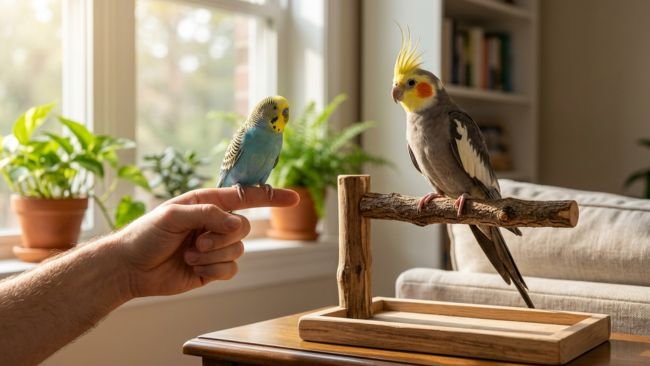
Advantages Small Birds vs Large Birds
Both categories of birds offer unique rewards, drawing in different types of enthusiasts.
The Charms and Benefits of Small Pet Birds
1. Managing Space and Noise:
For individuals residing in apartments or smaller homes, small pet birds for apartments are frequently the logical choice. Species such as budgies (parakeets), finches, and canaries generally require less physical space for their enclosures.
A small bird cage is undeniably more manageable to accommodate than the formidable structures needed for larger parrots. Furthermore, while all birds make some noise, the noise level small vs large birds comparison often favors the smaller varieties.
Their chirps, twitters and soft songs are typically less intrusive than the piercing calls of larger species, making them more compatible with close living quarters.
2. Approachability and Ease for New Owners:
Many consider small pet birds vs large birds to be significantly more approachable for novices. Smaller species can still form strong bonds, but their needs, while requiring dedication are often less intense than those of their larger counterparts.
This translates into a potentially less overwhelming introduction to avian care. The concept of best pet bird size for beginners is often associated with these smaller birds.
3. Initial and Ongoing Costs:
The cost of small birds vs large birds is considerably lower across the board. The initial purchase price of the bird itself, along with the necessary setup items like a small bird cage, perches and toys will be a fraction of what a large bird demands.
The ongoing expenses such as food, specialized diets and routine vet costs for small birds also tend to be substantially less for smaller species. This makes them a more financially accessible entry point into bird ownership.
4. Shorter Lifespans:
Smaller birds typically live for 5 to 15 years. While some might view a shorter lifespan as a negative, for individuals who cannot commit to a 30 to 80 year relationship, this can be a practical advantage. It allows for pet ownership without the generational commitment sometimes required by large parrots.
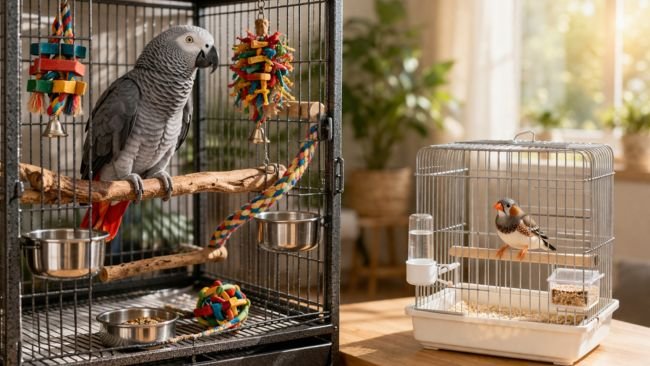
The Realities of Large Pet Birds
While captivating and capable of incredible bonds, large pet birds present a distinct set of considerations that require significant dedication.
1. Space and Environmental Needs:
When considering the space needed for large birds, the contrast is stark. Large parrots, such as macaws, cockatoos, and African Greys, necessitate substantial enclosures, sometimes walk-in aviaries that can occupy a significant portion of a room or even an entire dedicated space.
Their wing spans and need for movement dictate truly expansive habitats. For apartment dwellers, apartment living with large birds is often impractical due to both space and noise level small vs large birds differences, as their calls can be exceedingly loud, reaching decibel levels comparable to power tools.
2. Significant Time and Attention Investment:
A critical factor in large birds is the time commitment. Large parrots are highly intelligent and incredibly social creatures. They thrive on interaction and can suffer severe psychological distress if neglected.
They require several hours of dedicated and direct interaction daily. This also extends to training small birds vs large birds, where large parrots, while highly trainable, demand consistent, complex training regimens and intellectual stimulation to prevent boredom and behavioral issues like feather plucking or aggression.
3. Long Term Commitment and Financial Implications:
The lifespan of large pet birds highlights a monumental difference here. Many large parrots can live for 30, 50, or even 80+ years. This represents a lifelong commitment, often extending beyond the owner’s own lifespan requiring careful planning for the bird’s future care.
The cost large birds like large parrots is substantial. The initial purchase price alone can be thousands of dollars. Then comes the hefty investment in a large bird cage, specialized diets, numerous enrichment toys (which are frequently destroyed) and significantly higher vet costs due to their size and the complexity of potential health issues.
4. Personality and Interaction:
Large parrots often develop deep, almost human like bonds with their chosen person, displaying complex emotions, remarkable mimicry and a playful, often mischievous intelligence.
They can be incredibly rewarding companions offering rich interaction. However, their strong beaks mean they can also inflict serious injury if they feel threatened or are not properly handled.
Key Comparison Points: Small Bird Care vs Large Bird Care
To truly understand small vs. large birds which is better species a direct comparison of care aspects is illuminating.
| Bird Type | Small Birds (e.g., Budgies, Finches, Canaries, Lovebirds, Cockatiels) | Large Birds (e.g., African Greys, Amazons, Cockatoos, Macaws) |
| Space Required | Modest cage; can be housed in apartments. | Very large cage, aviary or dedicated bird proofed room. |
| Noise Level | Generally chirps, whistles; can be loud but less piercing. | Can be extremely loud, scream or shriek difficult for close neighbors. |
| Time Commitment | Daily feeding/watering, cage cleaning. Social interaction important but less intense. | Several hours of daily direct interaction, training and mental stimulation. Prone to behavioral issues if neglected. |
| Initial Cost | Bird: Lower (tens to low hundreds). Cage & Setup: Lower (hundreds). | Bird: High (hundreds to thousands). Cage & Setup: Very High (thousands). |
| Ongoing Cost | Lower food, smaller toys and generally lower vet bills. | Higher specialized food, frequent toy replacement and significant vet bills. |
| Lifespan | Shorter (5-20 years), depending on species. | Very long (30-80+ years), requires generational commitment. |
| Bite Potential | Can nip/bite, but usually not severely injurious. | Powerful beaks capable of serious injury. Requires careful handling and training. |
| Feather Dust | Varies by species; some produce less. | Many produce significant feather dust (e.g., Cockatoos, African Greys) can impact air quality and allergies. |
| Diet Complexity | Pellets, seeds, fresh produce. Generally simpler. | Often requires diverse, fresh diets and specific nutrient balances for health. |
| Training Needs | Can be trained for basic commands and some mimicry. | Highly intelligent, complex training for tricks, speech and behavior management. Essential for well being. |
Choosing Between Small Vs Large Pet Birds
The journey to select the right bird is deeply personal. As you weigh small vs large pet birds, consider these insights to help determine which pet bird fits my lifestyle.

- Your Living Space: Do you have a dedicated room or a substantial corner for a truly large enclosure, or is apartment living a strict limitation? Small birds are unequivocally better for confined spaces.
- Your Budget: Be honest about the financial commitment. Can you realistically afford not just the initial outlay but the decades of potentially significant expenses that a large bird entails, including specialized vet care? The advantages between small birds vs large birds are clear on the financial front.
- Your Time Availability: Are you able to dedicate several hours every single day to direct interaction, training, and enrichment activities for a large parrot, or is your schedule more suited to daily feeding, cage cleaning, and more casual interaction? This is a major differentiator in daily time investment.
- Your Experience Level: If you are a complete novice, beginning with small birds for beginners like a budgie or a cockatiel allows you to learn the ropes of avian husbandry without the advanced demands of a large parrot. While there are some best large birds for beginners (like a Quaker parrot for its size, but it still has complex needs) most larger species benefit from an experienced hand.
- Your Tolerance for Noise and Mess: Large birds are louder and can be significantly messier, scattering food and creating more dander. Are you prepared for potential noise complaints from neighbors or the need for more frequent and intensive cleaning?
- Your Expectations for Interaction: Do you desire a highly interactive, conversational companion that forms a strong, singular bond or are you content with an observational pet that adds cheerful background noise and aesthetic beauty? The personality differences play a huge role here. A small bird vs big parrot will offer very different interactive experiences.
The ultimate aim when deciding between small vs. large birds is to create a mutually beneficial relationship. It is not about one type of bird being inherently superior, but about finding the perfect match for your specific circumstances and what you can genuinely offer a living creature.
Whether you choose the compact charisma of a finch or the magnificent presence of a macaw, thorough research and honest self assessment are the keys to a rewarding journey into bird ownership. By carefully considering choosing between small and large pet birds based on space, time, cost, experience and temperament, you empower yourself to welcome a feathered friend that will truly thrive by your side for many years.
By Pettopedia Editorial Team
Pet Care Research & Content Team
Pettopedia Editorial Team is dedicated to helping pet parents make informed and confident decisions for their pet companions. Our articles are created through in depth research, practical insights with a strong understanding of animal behavior, nutrition and everyday pet health needs. Each piece is written to provide clear, reliable and actionable guidance that pet parents can trust.
Every Pettopedia article is carefully reviewed and updated to ensure accuracy, relevance and alignment with current pet care best practices. By combining a structured, long term content roadmap with a commitment to authenticity, Pettopedia aims to be the definitive digital encyclopedia for the modern pet parent. We aim to deliver content that is not only informative but also genuinely helpful in real life situations, which will help you and your pets thrive.