
Home ➤ Dogs ➤ Preparing Your Home For A New Dog
Bringing a dog home for the first time is one of the most exciting decisions you will ever make. But excitement without preparation is where things go wrong, that too fast. Within the first week, unprepared owners face chewed furniture, sleepless nights and a stressed dog that cannot settle. None of that is inevitable. Are you still thinking is a dog right for me?
At Pettopedia our team of trainers, veterinarians and pet behavior specialists has put together this complete readiness system so that your first week is calm, structured and genuinely enjoyable for both you and your dog. Whether you are adopting a rescue, buying from a breeder or rehoming an adult dog, this guide covers everything you need to do before your dog walks through the door.

Why Understanding Your Dog First Is the Single Most Important Step in Getting Ready for a Dog
Before you move a single piece of furniture or order a single product, you need to understand the specific dog you are bringing home. Breed, age, history and energy level dictate every decision that follows from how you arrange your space to what supplies actually matter.
Skipping this step is the most common mistake first time dog owners make and it leads to mismatched setups that frustrate both the owner and the dog.
How Size, Breed and Energy Level Should Shape Your Home Setup for a New Dog
Space and stimulation requirements vary enormously across breeds. A Great Dane needs clear open pathways and an elevated feeding station to reduce the risk of gastric torsion, a condition the American Kennel Club identifies as more common in large, deep chested breeds.
A Jack Russell Terrier, on the other hand, needs vertical containment and a dedicated outlet for digging and jumping. A high drive working breed like a Belgian Malinois left in an under stimulating home will create its own outlet and that outlet is rarely something you will appreciate.
Match your environment to the dog’s biological needs, not to your aesthetic preferences.
Puppy Proofing Vs. Preparing for an Adult Dog Vs. a Rescue, the differences matter
How to dog proof a house for a puppy is a very different question from how to prepare home for a rescue dog. Puppies require full baby proofing, needle sharp teeth, zero bladder control and relentless curiosity mean every corner is a potential hazard.
With an adult dog, the focus shifts to comfort, routine and separation anxiety prevention. Rescue dogs often arrive with unknown histories and possible trauma triggers.
So the priority in the first few days is a quiet, low stimulation environment that gives them space to decompress before they are expected to engage.
Does Your Lifestyle Actually Support a Dog Right Now?
This important question most people skip and the American Kennel Club identifies lifestyle mismatch as one of the leading causes of pet surrendering in the United States.
If you work long hours, your home setup for a new dog must include an automated feeding plan, a comfortable secure solo space and either a dog walker or a trusted neighbour who can provide midday relief. If you travel frequently, a vetted list of local sitters or a reliable boarding facility needs to be in place before your dog arrives, something not to be figured out on the morning of your first trip.
Consider How Much Time Does A Dog Really Need Every Day?
How to Dog Proof Your Home Room by Room Before Your Dog Arrives, A Safety First Checklist
Dog proofing your home is not about being overcautious, but about removing hazards that are genuinely dangerous to a species that explores entirely through smell and mouth contact. A home that looks safe to you can present serious risks to a dog with no concept of what is toxic, electrical or sharp.
One overlooked hazard can result in an emergency vet visit that costs far more than any preventive measure would have.
Indoor Safety Adjustments Every New Dog Owner Must Make
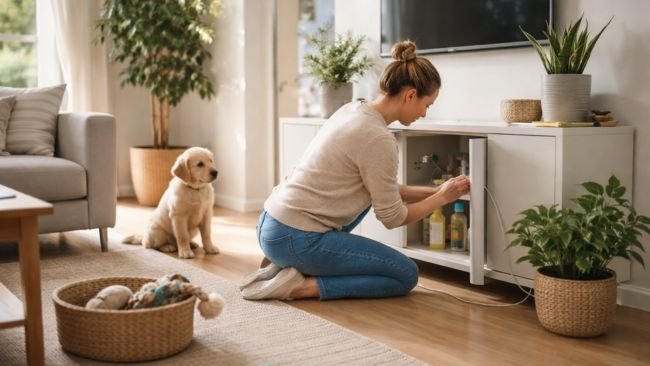
Start with a puppy eye view, get down on your hands and knees and see exactly what your dog will encounter. The ASPCA Animal Poison Control Center lists Lilies, Azaleas, Sago Palms and Dieffenbachia among the most toxic household plants for dogs, remove them entirely.
Secure all cleaning products, medications (ibuprofen is highly toxic to dogs even in small doses) and electrical cords before your dog arrives. Cord protectors or routing wires behind heavy furniture are both effective and inexpensive solutions.
Room by Room Dog Proofing Guide for a Safer Home
Each room in your home presents different risks and a thorough walkthrough before arrival prevents the majority of accidents.
- Kitchen: Fit child proof latches on the trash can. Xylitol, found in sugar free gum, some peanut butters and certain baked goods is lethal to dogs in very small quantities. Chocolate, grapes, onions and macadamia nuts are equally dangerous and commonly stored at dog accessible heights.
- Bathroom: Keep the toilet lid closed at all times. Cleaning chemicals left in the bowl combined with the drowning risk for smaller dogs make an open toilet a genuine hazard.
- Bedroom: Secure shoes, socks and loose laundry before your dog ever enters. Swallowed socks are among the most frequent causes of intestinal blockages requiring surgery, according to veterinary emergency reports.
- Living Room: Secure TV cables, remote controls and loose cushion stuffing. Keep children’s toys off the floor, small parts are a choking hazard for dogs just as they are for toddlers.
Outdoor and Garden Safety, What to Check Before Bringing Your Dog Outside
Walk your entire fence line and check for gaps, loose panels or areas where a dog could dig underneath. The garden itself deserves attention too, cocoa mulch contains theobromine, the same toxin found in chocolate and is widely used in residential gardens without owners realising the risk.
If you have a pool, it must be fully gated with no unsupervised access under any circumstance. These are things to do before getting a dog that are easy to overlook but critical to get right.
The Complete New Dog Checklist Every Supply You Need Ready Before Day One
One of the most common mistakes in first time dog owner preparation is either overbuying unnecessary products or realising on the first night that something essential is missing. This checklist focuses on what actually matters, the supplies that directly affect your dog’s safety, comfort and adjustment in the first days and weeks.
Feeding Essentials – Bowls, Food and What to Avoid
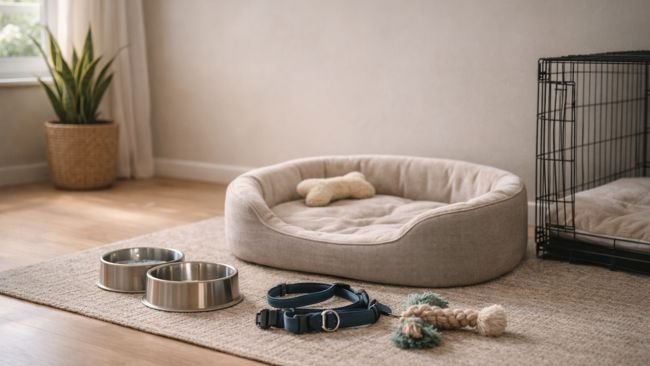
Avoid plastic bowls, they harbour bacteria and are a documented cause of canine acne around the muzzle. Stainless steel or ceramic bowls are the standard recommended by most veterinary practices.
For food, stay on whatever the shelter or breeder was feeding for at least the first two weeks, regardless of whether you plan to switch. Changing food too early almost always causes digestive upset, adding unnecessary stress to an already high transition period.
Sleeping and Comfort Setup – Where Should a New Dog Sleep the First Night?
The most common question new owners ask is: where should a new dog sleep the first night? For most dogs, a crate or a bed placed inside your bedroom. This provides closeness and a sense of pack security without giving your dog unsupervised access to the rest of the home.
A crate used correctly functions as a den, most dogs settle into it within a few days once they associate it with rest, safety and routine.
Walking Gear, ID Tags and Why Retractable Leashes Are a Bad Idea for New Dogs
A flat collar with an engraved ID tag is non negotiable from day one. If your dog gets out before microchipping is complete, that tag is the only thing standing between you and a lost animal.
A front clip harness is the better choice for rescues or strong pullers – it gives directional control without putting strain on the neck. Start with a standard 6-foot leash.
Retractable leashes offer very little control and are not suited to the unpredictability of a dog adjusting to a completely new environment.
Grooming Supplies and Hygiene Essentials to Have Ready
Enzymatic cleaner is the most important item on this list that most people forget. It is the only product that fully breaks down the odor markers in potty accidents, without it, your dog will return to the same spot repeatedly.
You will also need dog safe shampoo, nail clippers or a grinder and a brush matched to your dog’s coat type – slicker for long coats, bristle for short and a de-shedding tool for double coated breeds.
Training Tools and Chew Management From Day One
High value treats, freeze dried liver, small chicken pieces or cheese are your primary currency for establishing house rules. Stock up before your dog arrives.
Alongside treats, have several appropriate chew items ready from the first day. Giving your dog something acceptable to chew immediately is far more effective than waiting for them to find something unacceptable.
Training pads are useful for puppies in the early housetraining phase but should be phased out gradually as outdoor toilet routines are established.
How to Create a Dedicated Safe Space That Helps Your New Dog Settle In Faster
The environment you create in the first 48 hours has a measurable impact on how quickly your dog builds confidence in their new home. A dog that feels overwhelmed or unable to retreat will take significantly longer to settle and may develop anxiety driven behaviors that are harder to address later.
A well designed safe zone gives your dog a predictable anchor point while everything else is still unfamiliar.
Setting Up the Perfect Den Area – Location, Contents and Consistency
Pick one specific corner of your home as your dog’s primary zone for the first week, a quiet area of the living room or bedroom works well. Place the crate, bed, water bowl and a couple of chew toys here and keep the setup consistent.
Dogs orient to familiar smells and locations quickly. A fixed zone gives them something reliable to return to when the broader environment feels overwhelming.
Avoid placing this area near high traffic zones, loud appliances or windows with street level activity.
Common Setup Mistakes That Slow Down Your Dog’s Adjustment
Too much freedom too soon is the single most common error. Giving a new dog full access to the home before they understand the rules results in accidents, destructive behavior and a dog that has no sense of boundaries.
Use baby gates to restrict access to one or two rooms initially and expand gradually as trust and routine are established.
An overstimulating environment – constant noise, multiple visitors, children rushing at the dog – is equally counterproductive in the first few days.
How to Prepare Your Family and Other Pets So Everyone Adjusts Well Together
Bringing a dog home affects every member of the household, human and animal. The introductions and rules you establish in the first few days set the social tone for months. Getting this right from the start prevents territorial tension, fear responses and behavioral problems that can take a long time to undo.
Setting Household Rules Before Your Dog Arrives – Feeding, Training and Boundaries
Before your dog arrives, every person in the household needs to agree on the rules, who feeds the dog and when, which furniture is off limits, what commands will be used and how to respond to jumping or barking.
Inconsistency is one of the primary causes of confusion and slow progress in dog training. If one person allows the dog on the sofa and another does not, the dog cannot learn what is actually expected.
Introducing Your New Dog to Children Safely and Calmly
Brief, calm and supervised is the rule for every initial interaction between a new dog and children. Teach children to approach from the side rather than head on, to offer the back of a closed hand for sniffing and to avoid direct eye contact initially, which reduce the likelihood of a fear response.
Never leave a new dog alone with a child regardless of the dog’s reported temperament or history. Even the most gentle dog can react unpredictably in a new and overwhelming environment.
Introducing Your New Dog to Resident Pets Without Creating Conflict
Introduce dogs to each other on neutral ground, a park or quiet street, rather than inside the home where the resident dog already has territorial associations. Keep both dogs on leashes, walk them parallel at a comfortable distance and allow them to close the gap at their own pace.
For cats, use a baby gate to create a visual barrier for the first several days so both animals can observe each other without forced contact.
Rushing pet introductions is one of the most common mistakes new owners make and the tension it creates can take weeks to resolve.
What to Expect in Your Dog’s First 48 Hours at Home and How to Handle It With Confidence
The first two days at home are the highest stakes period of your dog’s transition. Everything is unfamiliar, the smells, the sounds, the people and the layout.
Understanding what is normal during this window and having a clear plan, makes the difference between a rocky start and a genuinely smooth one.

How to Structure the First Day So Your Dog Feels Safe, Not Overwhelmed
Keep the first day calm and low stimulation. Limit the number of people your dog meets, avoid inviting guests over and resist the urge to take your dog on a long outing to show them the world.
Instead, let them explore their designated zone at their own pace, take them outside for toilet breaks at regular intervals and give them space to rest without constant handling. The goal on day one is safety and calm, not bonding milestones.
First Night Expectations – Whining, Anxiety and What Not to Do
Whining, pacing and restlessness on the first night are completely normal responses to a new environment. Your dog is not misbehaving, they are expressing genuine uncertainty. Most dogs begin to settle within 30 to 45 minutes once they establish that the environment is stable.
Resist the urge to respond to every whine, as doing so teaches your dog that whining produces attention and reinforces the behavior. Wait for a brief pause before offering calm, quiet reassurance and keep it short.
Why Establishing a Daily Routine From Day One Speeds Up Adjustment
Dogs being pattern animals, a consistent daily routine – same feeding times, same walk times same toilet breaks reduces anxiety faster than any amount of reassurance or affection. Even an approximate routine in the first week gives your dog a framework to anticipate and that predictability is what builds genuine calm.
According to veterinary behaviorists, dogs that establish routine within the first week adjust significantly faster than those in unstructured environments.
Health and Veterinary Preparation – What to Organise Before Your Dog Comes Home
Veterinary preparation is one of the most overlooked parts of the pre arrival checklist. Having a vet selected, records reviewed and a basic first aid kit in place before your dog arrives means you are not making urgent decisions in a stressful moment.
Choosing the Right Veterinarian for Your New Dog
Research local veterinary practices before your dog arrives and book an initial health check within the first week. Look for a practice that has experience with your dog’s specific breed, offers clear communication and has a policy for after hours emergencies.
Establish this relationship early – a vet who knows your dog’s baseline health will be far more effective in an emergency than one meeting them for the first time.
Vaccination Records, Microchipping and Core Health Documentation
Obtain full vaccination and medical records from the shelter or breeder on collection day. Core vaccinations for dogs – distemper, parvovirus, adenovirus and rabies (where required by law) should be current or scheduled immediately if incomplete.
If your dog is not yet microchipped, arrange this at your first veterinary visit. Microchipping is the most reliable form of permanent identification and is legally required for dogs in many countries including the United Kingdom and Australia.
Building a Basic Canine First-Aid Kit Before Day One
A basic first-aid kit for dogs should include sterile gauze and bandage rolls, antiseptic wipes, saline solution for eye and wound rinsing, a rectal thermometer and the contact number for your nearest emergency veterinary clinic.
The ASPCA Animal Poison Control Center hotline (in the US) and the Veterinary Poisons Information Service (in the UK) are also worth saving in your phone before your dog arrives.
What It Actually Costs to Prepare for a New Dog – An Honest Breakdown
The initial cost of preparing for a dog varies significantly by breed and location, but a realistic baseline for essential supplies – crate, bed, bowls, collar, leash, harness, grooming tools, enzymatic cleaner and initial food – sits between $200 and $500 USD for most households.
Add the cost of an initial veterinary health check, any outstanding vaccinations, microchipping, and a total first month budget of $500 to $1,000 USD is a reasonable planning figure for most new owners.
One of the most important things to do before getting a dog is a realistic financial assessment, by understanding advantages and disadvantages of owning a dog.
Monthly Running Costs – Food, Grooming and Insurance
Monthly costs depend heavily on the size and breed of your dog. Food alone ranges from $30 to $100 USD per month. Professional grooming for breeds that require it adds $40 to $100 USD per session.
Pet insurance – which veterinary professionals widely recommend as protection against unexpected emergency costs typically runs $30 to $70 USD per month for a healthy young dog.
These are not optional line items, they are the baseline cost of responsible dog ownership.
Hidden Costs That Most New Owners Do Not Anticipate
Training classes, behavioral consultations, boarding or pet sitting fees, replacement of chewed items and emergency veterinary care are the costs that catch most new owners off guard.
A single foreign body obstruction surgery, the kind caused by a swallowed sock can cost between $1,500 and $5,000 USD depending on complexity.
Building an emergency fund of at least $1,000 USD before your dog arrives is not pessimistic, but practical.
Mental Stimulation and Enrichment – Setting Up an Environment That Prevents Destructive Behavior
Physical exercise alone is not enough to keep most dogs settled and well behaved. Mental stimulation is equally important and a dog that is mentally under stimulated will find its own ways to stay occupied, most of which involve destroying something.
Setting up enrichment from day one is one of the most effective things you can do to prevent behavioral problems before they start.
Why Mental Stimulation Is as Important as Physical Exercise for Dogs
The relationship between boredom and destructive behavior in dogs is well documented in veterinary behavioral literature. Dogs that lack mental stimulation exhibit higher rates of anxiety, excessive barking, chewing and digging. This is particularly true for working breeds and high energy dogs, but applies broadly across all breeds.
A dog that is mentally tired is a calm dog and mental fatigue is achieved through problem solving, not just running.
Practical Enrichment Ideas to Set Up Before Your Dog Arrives
Puzzle feeders and food dispensing toys are among the most effective enrichment tools available – they slow down eating, encourage problem solving and occupy a dog’s attention for extended periods.
Sniff mats, Kong toys stuffed with frozen food and structured foraging games are all low cost, high impact additions to your dog’s daily routine. Set these up as part of your home setup for a new dog before arrival so they are ready to use from day one.
Planning Daily Activity – Walks, Playtime and Rest
A realistic daily activity plan should include at least two structured walks, one or two short training sessions of five to ten minutes each and dedicated free play or enrichment time.
Rest is equally important, puppies in particular need significantly more sleep than most owners expect, often 16 to 18 hours per day according to the American Kennel Club.
Overtiring a new dog through constant interaction and stimulation is a common mistake that leads to irritability and nipping.
Common Mistakes to Avoid When Preparing for a New Dog – From People Who Have Seen Them All
After years of working with new dog owners, our team at Pettopedia has identified the mistakes that consistently derail the first weeks. Most of them are avoidable with a little foresight.
Overbuying unnecessary products is the most common financial mistake. Marketing in the pet industry is aggressive and the shelves are full of products that solve problems your dog may never have. Start with the essentials and add based on actual need.
Ignoring behavior needs in favour of physical comfort leads to dogs that are comfortable but poorly adjusted. A beautiful bed in a chaotic environment is not a good setup. Structure and predictability matter more than luxury.
Giving too much freedom too soon before your dog understands boundaries or has established any routine, results in accidents, destructive behavior and a dog that never quite settles.
Inconsistent rules across household members undermine training and confuse the dog. Agree on rules before your dog arrives, write them down if necessary and everyone hold on to them.
The Final Pre Arrival Checklist – Everything to Confirm Before Your Dog Comes Home
Use the below checklist in the 48 hours before your dog arrives to confirm that everything is in place.
- Home dog proofed room by room – Toxic plants removed, chemicals secured, cords protected and trash secured.
- Supplies ready – Bowls, crate, bed, collar, ID tag, leash, harness, enzymatic cleaner, appropriate food, treats and chew toys.
- Veterinarian selected – First appointment booked within the first week.
- Safe den space set up – A quiet area of the home with consistent layout.
- Family aligned on rules – Feeding schedule, off limits furniture, training commands and visitor policy for the first week.
- Daily routine planned – Feeding times, walk times, toilet break intervals and rest periods.
- Emergency contacts saved – Veterinary clinic, emergency vet, ASPCA poison control (US) or equivalent in your country.
- Financial preparation – First month budget confirmed along with emergency fund in place.
A Final Word From the Pettopedia Team – Preparation Is the Kindest Thing You Can Do for Your New Dog
Everything in this guide comes down to one principle – your dog cannot prepare for this transition, but you can. The effort you put in before your dog arrives directly shapes how safe, settled and confident they feel in those first critical days. This early foundation influences the relationship you build over years.
Do not rush this process. Go through the checklist section by section, confirm each item and give yourself the time to do it properly. The dogs that settle fastest and bond most deeply are almost always the ones whose owners slowed down before the arrival not after.
Bringing a dog home is not just an exciting moment. Done well, it is the beginning of one of the most rewarding relationships of your life. Prepare for it like it deserves.
By Pettopedia Editorial Team
Pet Care Research & Content Team
Pettopedia Editorial Team is dedicated to helping pet parents make informed and confident decisions for their pet companions. Our articles are created through in depth research, practical insights with a strong understanding of animal behavior, nutrition and everyday pet health needs. Each piece is written to provide clear, reliable and actionable guidance that pet parents can trust.
Every Pettopedia article is carefully reviewed and updated to ensure accuracy, relevance and alignment with current pet care best practices. By combining a structured, long term content roadmap with a commitment to authenticity, Pettopedia aims to be the definitive digital encyclopedia for the modern pet parent. We aim to deliver content that is not only informative but also genuinely helpful in real life situations, which will help you and your pets thrive.