
Home ➤ Dogs ➤ Must Have Supplies For A New Dog Owner
The moment you decide to bring a dog home, the excitement is immediate and so is the overwhelm. What do I actually need? The pet store shelves are packed, the online reviews contradict each other and every brand claims to be essential. The perfect setup has nothing to do with price tags or aesthetics. It has everything to do with functional readiness.
This article cuts through the noise. Whether you are bringing home a high energy puppy or a senior rescue with a gentle temperament, your success in those first weeks depends on having the right tools in place before the paws hit the floor. Proper preparation does not just make your life easier, it gives your new companion the psychological safety they need to settle in and thrive.

Before you even think about supplies, make sure you have covered the basics, you can go through Preparing Your Home For A New Dog to ensure your space is safe and ready before day one.
Why Buying the Right Dog Supplies Before Day One Matters More Than Most New Owners Realise
Getting the right supplies in place before your dog arrives is not just convenient, it is the difference between a calm first week and a chaotic one. Constantly rushing to fix problems as they appear, creates unnecessary stress for both you and your dog.
This section explains why early preparation is a strategic decision, not just a shopping exercise, and how it shapes your dog’s long term behavior from the very first day.
The most common first time mistake is shopping as you go picking up items reactively as problems appear. What actually happens is a predictable sequence – your dog has an accident and you have no enzymatic cleaner, so the scent mark remains and they return to the same spot. Your puppy chews your baseboards because there was no appropriate chew toy within reach.
These are not behavioral problems, they are preparation gaps.
Having your essential supplies ready in advance creates a calm, structured environment that allows your dog to adjust faster. It also helps you budget more effectively. There is a clear distinction between one time setup items – a crate, a harness, grooming tools and ongoing consumables like food and treats.
Understanding that difference prevents both overspending on day one and underpreparing on the things that actually matter.
The Complete New Dog Owner Checklist – Every Category You Need to Cover Before Your Dog Comes Home
Before diving into each category in detail, here is a high level map of everything a well prepared new dog owner needs to have in place. Think of these as the seven pillars of a functional home setup, each one plays a direct role in your dog’s health, safety, comfort and adjustment.
If you are looking for a dog supplies checklist for beginners, start here and work through each section.
- Feeding Essentials: Beyond just food, this covers the right bowls, the right quantities and the right routine to prevent digestive upset from day one.
- Walking and Safety Gear: Critical from the very first moment, even the trip from the car to your front door requires the right equipment.
- Training and Behavior Tools: The medium you will use to communicate house rules and build a relationship based on clarity rather than confusion.
- Grooming and Hygiene: The tools that keep your dog physically comfortable and your home genuinely clean, not just surface level tidy.
- Health and Emergency Supplies: The items most new owners skip entirely until they need them urgently and by then, it is too late to prepare.
- Optional Lifestyle Upgrades: The additions that are not strictly essential but make a meaningful difference to quality of life for both dog and owner.
What Your Dog Needs From Day One to Stay Healthy, Comfortable and Properly Nourished – Feeding Essentials
Nutrition is the foundation of everything – energy levels, coat condition, digestion and mood all trace back to what your dog eats and how it is served. This section covers not just what to buy, but the specific decisions around food selection, bowl material, placement and portion control that most beginner guides overlook entirely.
Getting this right from day one prevents the majority of early digestive and behavioral issues.
Why You Should Not Switch Your Dog’s Diet the Moment They Arrive and What to Buy Instead: Food Selection
When thinking about things to buy before getting a dog, food sits at the top of the list, but the instinct to immediately switch to your preferred brand is one of the most common early mistakes. Sudden dietary changes are the leading cause of what veterinarians call “new home diarrhoea,” a stress compounded digestive upset that makes an already unsettled dog feel significantly worse.
Purchase a small supply of whatever the breeder or shelter was feeding and use it to transition your dog slowly over seven to ten days, mixing increasing proportions of the new food into the old.
Whether you eventually choose dry kibble, wet food, or raw, look for brands that meet AAFCO (Association of American Feed Control Officials) nutritional standards, this is the baseline marker of a complete and balanced diet.
Not sure which breed you are buying for yet? Read Best Dog Breeds For First Time Owners to make the right choice before committing.
Why the Material You Choose Has a Real Impact on Your Dog’s Health and Hygiene: Bowls
Plastic bowls are one of the most widely sold and most problematic items in the pet market. Over time, plastic develops microscopic scratches that harbour bacteria and that bacterial build up is a well documented cause of canine acne – a condition that causes pustules and inflammation around the muzzle.
Stainless steel is the standard recommended by most veterinary practices – it is virtually indestructible, dishwasher safe, non porous and the most hygienic option available for both food and water.
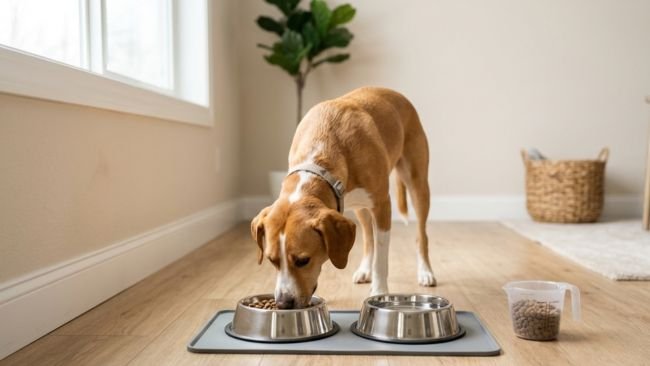
Heavy ceramic is a reasonable alternative, provided it is unglazed and free from lead based paint, which can be a concern with imported ceramic products.
How Placement, Timing and Portion Control Shape Your Dog’s Routine From the Start: Feeding Setup
What does a dog need on the first day? Above everything else, predictability. Place food and water bowls in a low traffic area of the home where your dog can eat without being startled or interrupted. Use a standard measuring cup rather than a rough scoop to ensure consistent portion control.
Overfeeding is one of the most common beginner mistakes and the consequences are not just weight related, chronic overfeeding contributes to long term joint stress and cardiovascular strain, particularly in larger breeds.
Feed at the same times every day from the moment your dog arrives and that routine becomes one of the first reliable anchors in their new environment.
How to Create a Resting Space That Makes Your Dog Feel Safe, Not Just Comfortable: Sleeping and Comfort Supplies
A dog that feels physically comfortable but psychologically unsettled will not rest properly – and a dog that cannot rest properly will struggle to regulate its behavior during waking hours.
This section covers the specific sleeping setup decisions that support your dog’s sense of security in those first critical days, not just their physical comfort. The right setup here makes a measurable difference to how quickly your dog adjusts.
Dog Bed Vs. Crate – Understanding Why a Crate Is a Tool for Security, Not Confinement
A crate is always needed least for the first several weeks. To a human, a crate looks like a cage, but to a dog, it functions as a den – a contained, predictable space where they are safe from stimulation and can rest without having to monitor their environment.
A high quality dog bed is excellent for lounging once your dog is settled, but in the early weeks, a crate provides the boundary setting and security that an open bed simply cannot replicate. It is also an essential tool for potty training and for preventing destructive behavior during the periods when you cannot supervise directly.
Where Should a New Dog Sleep on the First Night and Why the Answer Matters More Than You Think
The recommendation from most veterinary behaviorists is consistent, keep the crate or bed in your bedroom for at least the first few nights. Your dog does not yet know where they are, who you are or whether this situation is permanent.
Being able to smell and hear you through the night provides a level of reassurance that significantly reduces first night anxiety and the whining that accompanies it.
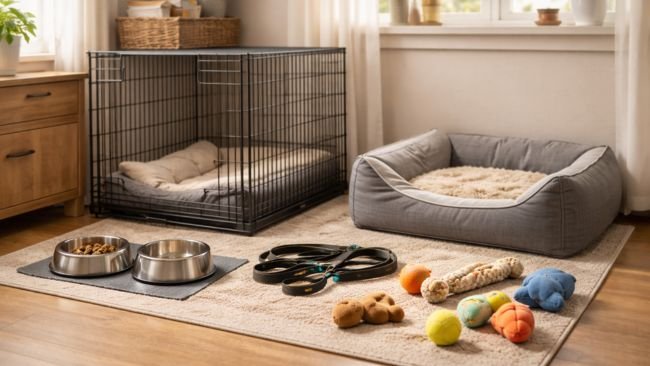
Once your dog has acclimated, typically within one to two weeks – you can gradually move the sleeping area to its permanent location. Proximity in those first 48 hours is not about spoiling your dog, it is about building the initial trust that everything else depends on.
Comfort Add-Ons That Actually Make a Difference for Anxious or Rescue Dogs
For dogs that arrive with high anxiety, particularly rescues or dogs removed from litters very young – a few additional comfort items can make a meaningful difference. A behavioral toy designed to simulate a heartbeat, such as the Snuggle Puppy has been shown to reduce stress vocalizations in puppies during the first nights in a new home.
A blanket that carries the scent of their previous environment, the shelter, the breeder or the foster home – provides familiar olfactory anchoring in an otherwise unfamiliar space. Pheromone diffusers such as Adaptil, which release a synthetic version of the calming pheromone produced by nursing mother dogs are also worth considering for rescue dogs who may be overwhelmed in the early days.
The Non Negotiable Equipment Every New Dog Owner Must Have in Place Before the First Step Outside: Walking and Safety Gear
Walking gear is not something you figure out after your dog arrives, it is something you need to have ready before the car door opens. Even the short journey from your vehicle to your front door requires the right equipment.
This section covers identification, control gear and leash selection, including the specific reasons why certain popular products are genuinely unsuitable for new dogs and new owners.
Collar, Harness, and ID Tags – Why Identification Is the Single Most Critical Item on Your Entire Checklist
An engraved ID tag on a flat collar is the most important item you will buy and it needs to be ready before your dog arrives, not ordered afterward. Even microchipped dogs should wear a visible ID tag at all times – microchipping requires a scanner to read, whereas a tag with your phone number can be read immediately by any member of the public who finds your dog.
For the walk itself, a front clip harness is generally superior to a collar alone for beginners. It provides better directional steering by redirecting a pulling dog toward you rather than allowing forward momentum and it eliminates the neck strain associated with collar only walking in dogs that pull.
Choosing the Right Leash and Why Retractable Leashes Create More Problems Than They Solve for New Dogs
A fixed 6-foot leash in nylon or leather is the correct choice for a new dog in a new environment. Retractable leashes are one of the most widely sold and most counterproductive products for first time owners. They offer virtually no control in situations that require an immediate response, an approaching dog, a moving vehicle or a sudden fearful reaction.
They also communicate to the dog that pulling is productive, since pulling is literally what extends the leash. This is the exact opposite of the behavior you are trying to establish during the critical early training phase. Save the retractable leash for a dog that already has a solid recall and leash manner, which is not the dog arriving at your home on day one.
Training and Behavior Supplies – The Tools You Need to Communicate House Rules Clearly and Build Good Habits From the Start
Training is not something that begins at a class six weeks after your dog arrives. It begins the moment your dog walks through the door. Every interaction in those first days either reinforces a behavior or sets a precedent and having the right tools in place from the start means you are communicating clearly rather than improvising.
Two categories of training supplies include treats and chew management
Treats – Understanding Why Not All Rewards Are Equal and How to Use Them Effectively From Day One
Treats function as your dog’s salary, the reward that makes learning feel worthwhile. But not all treats carry the same weight. High value treats like freeze dried liver or small pieces of plain cooked chicken, or strong smelling soft treats should be reserved for difficult tasks, new environments and high distraction situations.
Low value treats such as small pieces of your dog’s regular kibble are appropriate for simple repetitions in a calm environment where your dog is already engaged.
A treat pouch worn on your waist keeps rewards immediately accessible, timing is everything in canine learning and a reward delivered three seconds after the desired behavior has very little training value.
Chew Toys – Why Providing an Appropriate Outlet for Chewing Is One of the Most Important Things You Can Do Before Day One
Dogs explore the world through their mouths and puppies in particular have a genuine developmental need to chew during the teething phase. If you do not provide an appropriate outlet, they will create one and it will almost certainly involve something you value.
A durable rubber toy such as a KONG, which can be stuffed with food to extend engagement, is one of the most effective chew management tools available.
Match the toy to your dog’s chewing style, some dogs are aggressive shredders who need heavy duty rubber, while others are gentle nuzzlers who engage better with softer textures. Having two or three appropriate options available from the first day removes the need for constant redirection.
Every dog has a different personality and energy level, if you are still deciding, going through Choosing The Right Dog For Your Lifestyle will help you make the right call.
Grooming and Hygiene Supplies – Keeping Your Dog Physically Comfortable and Your Home Genuinely Clean
Grooming is not vanity, it is health maintenance. Regular brushing prevents painful matting, nail care prevents skeletal damage and proper accident cleanup prevents your dog from resoiling the same areas repeatedly. This section covers the specific tools you need for each of these functions, with particular attention to the one cleaning product that most new owners underestimate entirely.
The Basic Grooming Kit Every New Dog Owner Needs and Why Coat Type Should Drive Every Purchase Decision
The brush you buy must match your dog’s specific coat type, a one-size-fits-all approach does not work here. Short haired breeds benefit from a rubber curry brush that loosens dead hair and stimulates the skin.
Long haired breeds require a slicker brush for surface detangling and an undercoat rake to reach the dense secondary coat beneath, without the rake, mats form close to the skin where they are painful and difficult to remove.
Nail care is equally important and equally neglected, overgrown nails force a dog’s toes into an unnatural splayed position, which over time causes permanent changes to gait and skeletal alignment. A nail grinder is the less intimidating option for most new owners and tends to produce smoother results than clippers for dogs that are sensitive about their feet.
Why Enzymatic Cleaner Is the Most Important Hygiene Product You Will Buy and Why Standard Cleaners Make the Problem Worse
Enzymatic cleaner is the one product most new dog owners do not have ready and then urgently wish they did after the first accident. Standard household cleaners, including many that smell clean to humans often contain ammonia, which is chemically similar to the compounds found in dog urine.
To your dog’s nose, cleaning an accident with an ammonia based product effectively marks the spot again, which is why dogs repeatedly soil the same areas even after what looks like a thorough clean.
Enzymatic cleaners work differently, they contain biological enzymes that break down the protein compounds in urine, faeces and vomit at a molecular level, fully eliminating the scent marker rather than masking it. Have at least one large bottle ready before your dog arrives.
Health and Emergency Supplies – The Items Most New Owners Skip Until the Moment They Urgently Need Them
Health preparation is the category that gets the least attention in most new dog owner guides and the most attention the moment something goes wrong. A basic first aid kit and a preventive care routine are not signs of pessimism; they are signs of responsible ownership.
This section covers exactly what to have in place before your dog arrives, so you are never making urgent decisions without the tools to act on them.
A Basic First-Aid Kit for Dogs What to Include and Why Each Item Earns Its Place
Every responsible dog owner needs a dedicated first aid kit and it should be assembled before your dog comes home not after. At minimum, it should contain self adhesive bandages that do not stick to fur, antiseptic wipes, sterile saline solution for flushing wounds and eyes, a digital rectal thermometer (the most accurate method for checking a dog’s temperature) and a pair of fine tipped tweezers specifically for tick removal.
Save the contact number for your nearest 24-hour emergency veterinary clinic in your phone before your dog arrives, locating it during an emergency is not the time to be searching.
Preventive Care Supplies – Why Starting Dental Hygiene Early Is One of the Most Valuable Things You Can Do for Your Dog’s Long Term Health
Prevention is significantly cheaper than treatment in veterinary care and dental hygiene is one of the most impactful areas where early habits pay long term dividends. According to the American Veterinary Dental College, periodontal disease is the most common clinical condition in adult dogs and it is largely preventable with regular home dental care.
Start with a dog safe toothbrush and enzymatic toothpaste (never human toothpaste, which contains fluoride that is toxic to dogs) and introduce the routine gradually from the first week. A dog that accepts tooth brushing as part of daily life from puppyhood is significantly easier to care for than one that has never experienced it.
Optional but Highly Recommended Supplies – The Lifestyle Additions That Genuinely Improve Your Dog’s Quality of Life Once the Essentials Are in Place
Once the foundational supplies are covered, there are several additions that are not strictly essential but deliver real value depending on your lifestyle and your dog’s specific needs. These tools solve real problems for real owners in specific situations.
- Puzzle Toys and Food Dispensers: Mental stimulation is as physiologically tiring as physical exercise, a dog that has worked for its food through a puzzle feeder is genuinely calmer than one that has eaten from a static bowl. These are particularly valuable for high drive breeds and dogs left alone for extended periods.
- Pet Cameras with Two Way Audio: If you work full time and are concerned about separation anxiety, a pet camera allows you to monitor your dog’s behavior during your absence and intervene verbally if distress escalates. This is also genuinely useful data for a behavioral assessment if problems persist.
- Travel and Car Safety Gear: A crash tested car harness or a secured travel crate is the responsible choice for transporting your dog. Unrestrained dogs in vehicles are a safety risk for both the dog and the occupants and in several countries, travelling with an unrestrained dog is a driving offense.
If you work full time, it is also worth reading How Much Time Does A Dog Really Need Every Day? before committing to a routine.
How Much It Actually Costs to Set Up for a New Dog – Honest Budget Breakdown Without the Marketing Gloss
One of the most important things to do before getting a dog is sit down with a realistic budget, not the optimistic version, but the honest one. The pet industry is skilled at making products feel essential and without a clear framework, it is easy to overspend in the wrong areas while underpreparing in the ones that actually matter. This section gives you a realistic cost map for both initial setup and ongoing monthly expenses.
Initial Setup Cost Breakdown – What to Expect in Your First Month as a Dog Owner
How much do dog supplies cost for beginners? On average, a well prepared first month sits between $400 and $800 USD, covering the durable goods that will last for years alongside the initial consumables.
A realistic breakdown looks like this:
- Crate and bed: $100 – $250
- Initial food and treats: $60 – $100
- Initial veterinary wellness visit: $100 – $200
- Grooming tools, cleaning supplies and walking gear: $50 – $150
These are not luxury figures, they represent the functional baseline for responsible first month ownership.
Where to Spend and Where You Can Reasonably Save Without Compromising Your Dog’s Welfare
The general principle is to spend on safety and health, save on aesthetics and brand names. A high quality crate, a well fitted harness, and a durable leash are worth investing in, these are the items where quality directly affects your dog’s safety and your ability to control them.
You can reasonably save on decorative bedding, branded toys and seasonal accessories – your dog has no opinion on whether their blanket matches your sofa.
Buy washable, functional and durable wherever safety is involved. Save the discretionary budget for the things your specific dog actually enjoys once you know their personality.
The Most Common Buying Mistakes First-Time Dog Owners Make and How to Avoid Wasting Money Before You Even Start
Buying everything at once before knowing your dog’s personality is the most expensive mistake. Most purchasing mistakes are driven by excitement rather than information and most of them are entirely avoidable with a little foresight.
Your dog will tell you very quickly whether they are a fetcher, a chewer, a shredder or a dog that ignores toys entirely. Buying ten different toy types on day one before you have that information is a reliable way to accumulate a box of unused products.
Ignoring size and fit when purchasing harnesses and collars leads to gear that either slips off or causes discomfort. Sizing is not standardised across brands – always measure your dog’s neck and chest circumference and compare against the specific brand’s size chart before purchasing.
Choosing aesthetics over function creates products that look appealing and perform poorly. A beautiful white dog bed is a poor choice for a dog that will be walked through mud every morning. Opt for removable, machine washable covers in colors and materials that are practical for actual dog ownership rather than Instagram.
How to Prioritise Your Purchases When You Are Working With a Tight Budget – A Tiered Approach That Covers What Matters Most
Not every new dog owner has $600 to spend before their dog arrives and that is completely fine. The key is understanding which items are genuinely non negotiable and which can be added later without compromising your dog’s welfare or your ability to manage them safely.
- Tier 1: Must have Before Your Dog Arrives: Food matched to what they were already eating, a stainless steel water bowl, a flat collar with an engraved ID tag, a 6-foot leash, enzymatic cleaner and a designated sleeping spot, even a folded blanket in a quiet corner is functional in the short term.
- Tier 2: First Week Additions: A crate if you do not yet have one, a basic grooming brush appropriate for your dog’s coat type, nail clippers or a grinder and high value training treats to begin establishing basic house rules.
- Tier 3: Upgrade When Ready: Puzzle feeders, car safety harnesses, pet cameras, specialised grooming products and any lifestyle additions that match your specific dog’s needs once you know them.
The Final Pre Arrival Supply Checklist – A Scannable Summary to Check Off Before You Collect Your Dog
Use this checklist in the 24 to 48 hours before your dog arrives to confirm that everything critical is in place. This is not a wish list – it is the functional minimum for a well prepared home.
- Rest: A crate sized appropriately for your dog’s breed, a bed or blanket inside it and one comfort item with a familiar scent if possible.
- Safety and Control: A flat collar with an engraved ID tag, a front clip harness fitted to your dog’s measurements and a fixed 6-foot leash.
- Hygiene: A large bottle of enzymatic cleaner, biodegradable waste bags and dog safe shampoo.
- Training: Two types of treats – high value for difficult tasks, low value for simple repetitions and at least one appropriate chew toy.
- Medical: A basic first aid kit assembled and accessible and the phone number of your nearest 24-hour emergency veterinary clinic saved in your phone.
For a full breakdown of what to expect in those first 48 hours, please go through Bringing A New Dog Home.
A Final Word – Preparation Is the Greatest Gift You Can Give Your New Dog Before They Even Arrive
Preparation is not just a practical exercise, it is the first act of care you extend to an animal that has no way of preparing for this transition themselves. When your essentials are in place before your dog arrives, you are not just checking boxes. You are removing the friction from their adjustment, giving them a clear environment to read and communicating through structure rather than words, that this is a safe place where their needs will be met.

A well prepared home tells a dog that they are secure. That security builds faster than any amount of affection or reassurance and it creates the foundation for a bond that deepens over years rather than weeks.
Go through this checklist section by section. Take the time to do it properly. The dog arriving at your door deserves an owner who was ready – and you now have everything you need to be exactly that.
By Pettopedia Editorial Team
Pet Care Research & Content Team
Pettopedia Editorial Team is dedicated to helping pet parents make informed and confident decisions for their pet companions. Our articles are created through in depth research, practical insights with a strong understanding of animal behavior, nutrition and everyday pet health needs. Each piece is written to provide clear, reliable and actionable guidance that pet parents can trust.
Every Pettopedia article is carefully reviewed and updated to ensure accuracy, relevance and alignment with current pet care best practices. By combining a structured, long term content roadmap with a commitment to authenticity, Pettopedia aims to be the definitive digital encyclopedia for the modern pet parent. We aim to deliver content that is not only informative but also genuinely helpful in real life situations, which will help you and your pets thrive.