
Home ➤ Dogs ➤ First Time Dog Owner Mistakes To Avoid
Bringing a dog home is one of those decisions that feels completely manageable right up until the moment a puppy discovers your Italian leather loafers! Most first time dog owner mistakes have nothing to do with not caring enough.
They happen because dogs and humans are genuinely different species trying to figure each other out. Dogs do not know about house rules or expensive furniture. This article explain the common mistakes first time dog owner make in the early days and how to handle them.
Bringing a dog home feels manageable at first, but it is worth asking yourself a bigger question, are you fully ready for a dog? If you are still unsure, Should I Get A Dog? helps you decide realistically.
Why Preparing Before the Dog Arrives Saves You Money and Stress
Most dog owners assume preparation means shopping. This actually involves thinking through the dog’s first 24 hours before those hours actually arrive, so you are not scrambling for a crate at 10pm or realising there is no enzyme cleaner in the house after the first accident.
The moment a dog is confirmed, something strange happens to the human brain. Every pet store aisle suddenly looks essential. The heated water bowl. The monogrammed bandana. The three tier treat dispenser, which all can wait.
What cannot wait is the functional baseline – a place to sleep, something to eat from, a way to get outside and a cleaning supplies for the inevitable accident. A dog that arriving home without these basics is a stressed dog. And a stressed dog on day one sets a harder tone for everything that follows.
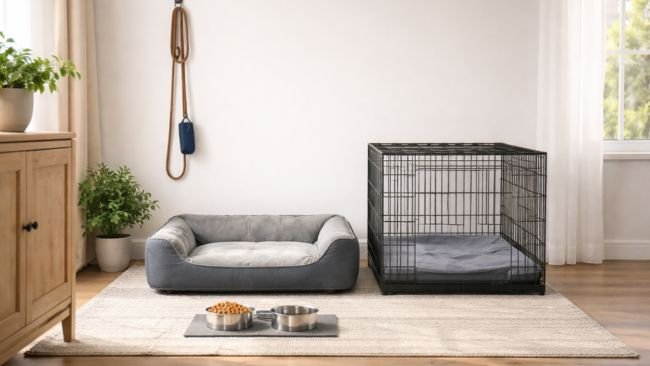
Also it is not practical to buy heavy equipment before you understand your specific dog’s personality. A large, reinforced crate purchased before knowing whether the dog tolerates confinement is money potentially wasted. Some dogs settle into crates immediately. Others have real anxiety about enclosed spaces. The gear should follow the dog and not the other way around.
Much of this preparation depends on the type of dog you are bringing home. If you have not finalised that decision, learning how to choose the right dog based on your lifestyle prevents many of these early mistakes.
What You Need Before Bringing Your Dog Home
This is not an exhaustive shopping list, but a minimum viable setup – the things that need to be in place before the dog arrival. Everything beyond this can be added once you know what you are working with.
- Feeding: High quality dog food suited to the dog’s age and size, stainless steel bowls and a measuring cup for accurate portions.
- Sleeping: A crate in the right size, a washable bed or crate mat and a quiet placement spot away from heavy foot traffic.
- Training: A standard 6-foot fixed leash, a flat collar with room for two fingers and high value treats for reinforcement.
- Grooming: A brush appropriate for the dog’s coat type, dog safe shampoo and basic dental care tools.
- Health: A simple first aid kit, the contact details of a local vet and a parasite prevention plan in place from day one.
Please avoid the urge to add anything else to this list before you know the dog. If you want a more detailed breakdown, refer to must have supplies for a new dog owner.
The Right Food Setup, Bowls And Sleeping Area Make First Week Easier
The early days with a new dog are disorienting for the animal. Everything smells different, the sounds are unfamiliar, and the routine it had before, wherever it came from, no longer applies. The right physical setup does not fix that adjustment, but it reduces friction and gives the dog something stable to anchor to.
The first few days after bringing a new dog home are critical and the setup you create directly affects how smoothly the transition goes.
Choosing the Right Food and Water Bowls
Plastic bowls are cheap and widely available, but are not the best choice. Microscopic scratches develop in the surface over time and those scratches harbour bacteria that can cause a skin condition around the muzzle sometimes called canine acne. It is minor, but avoidable. Stainless steel or ceramic bowls are more durable, easier to clean properly and do not carry that risk.
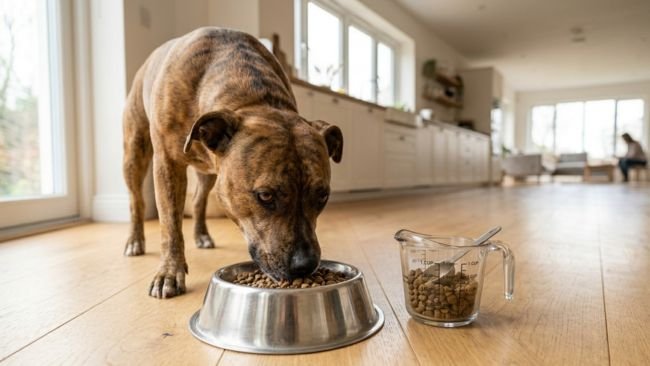
For dogs that eat fast and some dogs eat like they are racing an invisible competitor, a slow feeder bowl is worth considering. Bloat is a genuine medical emergency in fast eating dogs, particularly in larger and deep chested breeds. It can be fatal. A slow feeder adds a few minutes to mealtime and meaningfully lowers that risk. It is one of the cheaper things on the list with one of the higher impacts.
Setting Up a Sleeping Space That Actually Works
The material of the bed is almost secondary to where it is placed. A dog sleeping in an isolated room on the first night feels cut off and that isolation feeds the anxiety that can take weeks to unwind. A quiet corner of a room where the household spends time is the right location – close enough to feel connected and far enough to actually decompress.
For puppies still in the active teething phase, an expensive orthopedic bed is a poor investment right now. Something washable, simple and replaceable is the right call. The good bed can come later, once the compulsion to chew everything within reach has passed.
The crate, if used, should sit in or near the sleeping area. Covering three sides with a blanket makes it feel more den like, which is what dogs are naturally drawn to. An open, exposed crate in the middle of a room does not trigger that instinct the same way.
Leash And Harness Mistakes That Make Every Walk Harder
Walking a dog sounds simple. In practice, the wrong equipment makes it a daily frustration, for the owner and for the dog.
Retractable leashes are one of the most common purchases new owners make and one of the more counterproductive ones. The mechanism itself teaches pulling. The dog learns quickly that extending outward creates more freedom and that lesson becomes deeply ingrained within a few walks. Retractable leashes also pose real safety risks in busy environments – the cord can snap, tangle around legs or give the dog enough distance to reach a dangerous situation before the owner can respond.
A standard 6-foot fixed leash is the reliable alternative. It keeps the dog at a manageable distance, gives the owner clear physical feedback through the lead and does not reward the pulling behaviour. Paired with a front clip harness, it becomes an effective setup for most beginner owners. The front clip redirects the dog’s forward momentum when it pulls, rather than letting tension build. It also removes pressure from the throat, which matters particularly for smaller breeds, brachycephalic dogs or any dog with a history of tracheal issues.
Flat collars remain useful for ID tags and for dogs that already walk calmly. They are not the right primary control tool during the training phase for a dog that pulls.
Feeding Mistakes That Quietly Damage Your Dog’s Health Over Time
Food is where a lot of quiet cumulative damage happens. The mistakes here build slowly over months and show up as weight problems, digestive issues or nutritional gaps that only become visible at a vet visit.
Why Switching Food Brands Is A Problem
Changing food based on what is on sale seems harmless. Within 48 hours, the carpet usually tells a different story. A dog’s digestive system adapts to a specific food composition and abrupt changes trigger a response – loose stools, vomiting and general stomach upset. It is one of the most avoidable causes of digestive distress in new dogs and happens constantly because owners do not realise how sensitive the gut is to sudden changes.
If a food switch is genuinely necessary because of a health recommendation, an allergy or a life stage change – the right approach is a gradual transition over seven to ten days. Start with mostly the old food and a small amount of the new and then shift the ratio slowly. The digestive system adjusts but needs little time.
Portion Sizes Need a Measuring Cup – Not An Estimate
More than half of dogs in the US and UK are classified as overweight. The primary driver is not treats, but daily meal portions that are slightly too large, repeated over months and years. Eyeballing is not accurate enough. A measuring cup is how consistent and correct portions happen.
Treats require the same discipline. A strip of bacon given to a 10-pound dog is proportionally closer to a double cheeseburger for a person. The calorie-to-bodyweight ratio is genuinely that significant. Treats should be reserved for training moments and be used in small quantities.
A training treat should be roughly the size of a pea. If the dog is working through a high repetition training session, reduce the meal size slightly that day to compensate.
Training Tools That Speed Up Learning And Prevent Bad Habits
The right tools do not train the dog, the owner does. But the right tools make the communication clearer, faster and more consistent — which is what actually accelerates learning in the early weeks.
How to Use A Crate Without Creating Wrong Association
The crate works because dogs are naturally drawn to small and enclosed spaces. It taps into a denning instinct that exists regardless of breed. When introduced correctly, the crate becomes the dog’s preferred resting place – somewhere it chooses to go, not somewhere it is sent.
The most common mistake is using it as punishment. A dog sent to its crate after misbehaving learns one thing – the crate means something went wrong. That association poisons every future crate experience and makes house training significantly harder. The crate should only ever be associated with rest, calm and safety. Feed meals in or near it. Place favourite chews inside. Let the dog explore it on its own terms before closing the door.
Size being important, crate should be large enough for the dog to stand, turn around and lie down comfortably. Too large and the dog will section off one corner as a bathroom – which defeats the house training purpose entirely.
Why an Enzyme Cleaner Is More Important Than Most People Realise
Standard household cleaners contain ammonia as an active ingredient. To a dog, ammonia smells like urine. Cleaning an accident spot with a standard cleaner does not remove the signal, it reinforces it. The dog returns to the spot, detects something that smells like a pre existing bathroom and uses it again. The pattern repeats.
Enzyme cleaners work differently, breaking down the organic compounds in urine at a molecular level, eliminating the odour signal rather than masking it. For a dog that is still being house trained, this distinction matters enormously. One bottle of enzyme cleaner used consistently during the early weeks prevents a pattern from forming that otherwise takes months to undo.
The Timing Problem With Positive Reinforcement
A clicker or a consistent verbal marker – a short word like “yes” used identically every time, tells the dog the exact moment it did something right. The precision of that timing is what makes reinforcement work. A reward delivered five seconds after the correct behaviour is not a reward for that behaviour. By then, the dog has already moved on mentally and the connection between action and consequence does not form.
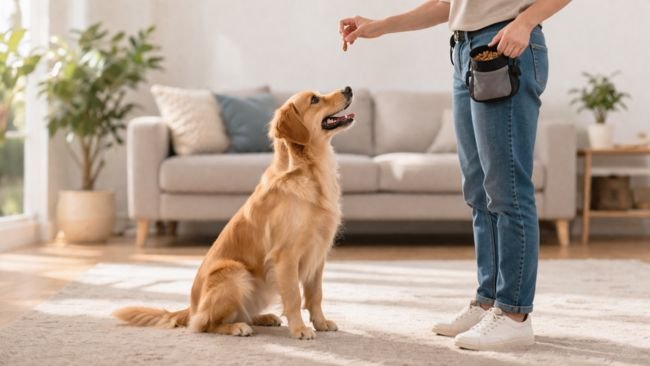
A treat pouch worn during training sessions solves the timing problem. Rewards are immediately accessible, the moment is not lost and the dog receives clear feedback. Over repetitions, this clarity is what builds reliable behaviour and only not the treats themselves.
Grooming Mistakes That Lead To Painful And Expensive Problems
Grooming is where the consequences of neglect are slow but significant. A matted coat does not develop overnight. It builds over weeks of skipped brushing until the mats are tight against the skin, pulling constantly and causing sores underneath. At that point, de-matting is painful for the dog and sometimes requires sedation at a groomer.
The right brush depends on the coat. A slicker brush works for poodles, doodles and similar wavy or curly coats. A de-shedding tool is what handles the volume produced by Labs, German Shepherds, Huskies and other heavy shedders. Using the wrong brush does not just fail to do the job, but it can miss mat formation entirely while giving the owner the impression that grooming is happening.
Two areas that consistently get delayed are nails and teeth. Nails that are too long make an audible clicking sound on hard floors and at that point, they are already long enough to be affecting the dog’s gait and weight distribution. Over time, this causes real skeletal problems. Nails should be trimmed before that clicking sound starts.
Dental disease is the most common clinical condition in adult dogs. Most owners do not start brushing until there is already a visible problem, at which point a professional dental cleaning under anaesthesia is often needed, a procedure that typically costs upward of $1,000. Starting a brushing routine early or even two-three times per week is less painful for the dog and significantly cheaper for the owner.
Health And Vet Essentials To Sort Out In First Week
Health care in the early weeks is almost entirely preventative. This establishes a foundation that makes problems less likely and easier to manage when they do arise.
Why First Vet Visit Should Happen Within 48 Hours
The first vet visit should be a routine check-in, not a response to something going wrong. Within 48 hours of bringing the dog home, a baseline appointment establishes the dog’s current weight, heart rate, vaccination status and any existing conditions worth monitoring. That baseline matters – it gives future visits a reference point which means the relationship with a vet is already in place before an emergency creates a frantic search for one.
Many new owners wait until there is an obvious problem before booking an appointment. By then, a health issue may have progressed, the cost is higher and the stress of an emergency visit is added to whatever the dog is already dealing with.
What Should Be In A Basic Dog First Aid Kit
A practical kit does not need to be elaborate. Gauze pads, self-adhesive bandages, antiseptic wipes and a digital rectal thermometer cover the majority of minor incidents that can be handled at home. The more valuable skill alongside the kit is knowing what qualifies as manageable versus what needs immediate veterinary attention.
A small cut that is not deep, not actively bleeding heavily and not near a joint can usually be cleaned and wrapped at home. A deep laceration, any suspected broken bone, signs of poisoning, difficulty breathing or collapse – all of these are vet emergencies. No first aid kit substitutes for that call.
Why Parasite Prevention Cannot Be Skipped
The assumption that urban or indoor dogs do not need parasite prevention is one of the more common and costly mistakes in dog health. Mosquitoes fly into apartments. City parks have ticks in the grass and shrubs. A single mosquito bite can transmit heartworm larvae. A single tick bite can cause Lyme disease. Both conditions are serious, expensive to treat and straightforwardly prevented with a monthly preventative that costs a fraction of the treatment.
Heartworm treatment when it gets to that stage, involves multiple vet visits, injections and a period of strict rest. The monthly preventative is cheaper than a single copay on that process.
How To Dog Proof Your Home Before First Day
Dogs explore with their mouths. That is just how they gather information about a new environment. Any home contains a significant number of things that are either dangerous to chew or genuinely toxic and dogs have no way of knowing the same.
Before the dog arrives, walk through the home at roughly the dog’s eye level. Electrical cords are chewing targets that present real electrocution risk. Several common houseplants – Sago Palm, Peace Lily, Pothos and Dieffenbachia are toxic to dogs. Kitchen bins are accessible to a determined dog within seconds and often contain chicken bones, onion skins, coffee grounds and other genuinely dangerous items.
Baby gates are useful during this period, not to permanently restrict the dog but to define a manageable space while house training is still in progress. A dog with unsupervised access to every room before it is reliable will find exactly the most inconvenient or expensive place to have an accident or chew something. Limiting that range while trust is being established is very practical.
Why Mental Stimulation Matters As Much As Physical Exercise
Physical exercise gets most of the attention in dog care conversations and it matters. But mental fatigue does just as much to produce a calm, settled dog and most new owners underestimate how significant that difference is. Many new owners underestimate the daily commitment required. Understanding how much time a dog really needs every day helps set realistic expectations.
A dog that is physically tired but mentally under stimulated is still restless. It will chew, dig, bark or find another outlet for the energy that has nowhere productive to go. A dog that has been mentally engaged through training, problem solving or structured play is genuinely tired in a way that settles it down for hours.
Puzzle feeders are the simplest and most practical tool for this. Instead of eating from a bowl in 30 seconds, the dog spends 15 to 20 minutes working to extract food from a puzzle. That engagement is cognitively demanding in a way that produces real tiredness. On days where a full walk is not possible, a puzzle feeder takes the edge off.
On toy selection, avoid anything shaped like clothing, footwear or fabric items. A toy shaped like a sneaker teaches the dog that sneakers are appropriate chew targets. Keep shapes clearly distinct from household objects and rotate toys periodically so novelty is maintained.
What To Know About Travelling And Going Out In Public With Your Dog
The responsibilities that come with owning a dog do not stop at the front door. In public spaces and vehicles, there are both legal requirements and basic expectations that apply from the first outing.
In many countries and states, dogs are legally required to be restrained while travelling in a vehicle. An unrestrained dog in a crash is a serious hazard, not just to itself, but to every person in the car. In a collision, an unrestrained 30-pound dog becomes a 300-pound projectile at 30mph. A crash tested harness connected to a seatbelt anchor or a properly secured travel crate, are the two options that actually address this.
In public spaces, clean up after the dog. In cities like London and New York, not doing so carries real fines. Beyond the legal side, it is the minimum standard of consideration for shared spaces. Biodegradable poop bags are inexpensive and take up almost no space in a pocket or bag. There is no reasonable argument for not carrying them.
The Real Financial Cost Of Dog Ownership That Most People Underestimate
The sticker price of getting a dog, adoption fee and initial gear is visible and easy to prepare for. The ongoing costs are where most new owners find themselves underprepared. Not because they are irresponsible, but because those recurring expenses are less visible until they are already accumulating.
For the first year, a realistic total for gear, food, vet visits, vaccinations and preventatives typically lands between $1,500 and $3,000 depending on breed, location and whether any health issues arise. After the first year, monthly costs for quality food, insurance and preventatives generally run $100 to $200. That number climbs if the dog develops an ongoing health condition, needs specialist care or requires professional grooming regularly.
Pet insurance is an important consideration. One emergency vet visit for an intestinal blockage – a swallowed sock, a piece of a toy or a chicken bone can cost $3,000 to $5,000. Torn ligaments, allergic reactions, sudden illness – none of these are rare occurrences and neither are predictable. Insurance converts an unpredictable financial crisis into a manageable monthly expense. If there is a budget choice between a designer collar and a basic insurance policy, the insurance wins every single time.
For a broader perspective on ownership beyond just costs, dogs as pets covers the full picture.
The Mistakes That Have Nothing To Do With What You Buy
There is a version of new dog ownership that involves every premium product available and still ends up with a stressed and poorly behaved dog. That outcome happens when the investment goes into gear instead of time.
Dogs need structure more than they need stuff. Consistent training, a predictable routine, regular socialisation with people and other dogs and a clear set of boundaries produce a well adjusted animal. No toy, no bed and no expensive harness substitutes for them. A dog that is over supplied with products but under invested in by its owner is still an anxious dog. The anxiety just has nicer surroundings.
The other common trap is prioritising aesthetics over function. A harness that looks good in photos but restricts shoulder movement causes the dog discomfort with every step. A bed that cannot be washed becomes a hygiene problem within weeks. Equipment should always be evaluated on how it serves the dog and not on how it photographs.
What To Buy Immediately And What Can Wait Until Later
Phasing purchases reduces financial pressure and prevents buying things that turn out to be wrong for the specific dog. The first week has genuinely limited requirements. Everything beyond the basics can wait until the dog’s personality, size preferences and habits are clearer.
- Buy before or on Day 1: Food appropriate for the dog’s age and breed, stainless steel bowls, a standard 6-foot leash, a flat collar with an ID tag, a correctly sized crate and an enzyme cleaner.
- Leave for Week 2 to 4: Professional grooming kits, advanced puzzle toys, travel accessories, rain gear, breed specific supplements and anything that benefits from knowing the dog’s preferences first. Buying these things before the dog arrives often results in returning or replacing them once the reality of the animal does not match the assumption.
Starting lean is not cutting corners. It reduces overwhelm for the owner and keeps the focus on the dog rather than the equipment.
How A Simple Daily Routine Changes Dog’s Behaviour
Dogs track time with more accuracy than most owners expect. A consistent schedule creates predictability and predictability reduces anxiety. A dog that knows when the morning walk happens, when meals arrive and when the training session takes place is a calmer dog than one whose day is unpredictable.
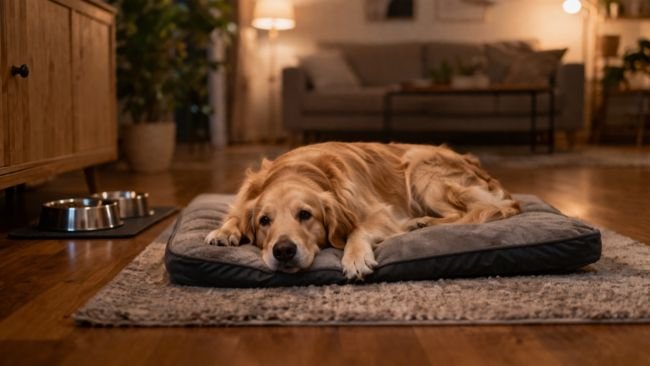
This matters most in the early weeks, when everything about the new environment is unfamiliar. A fixed routine, even a simple one gives the dog a framework to orient around. Anxiety in dogs is often just uncertainty. When the next thing is reliably predictable, the edge comes off, behaviour stabilises and the training that is happening alongside that routine starts to land more effectively.
The routine does not need to be complex. A morning walk at roughly the same time, meals at consistent points in the day and a short training session in the evening covers the basics. What matters is that it happens consistently and not that it is elaborate.
Frequently Asked Questions
1. What do I absolutely need before bringing a dog home?
The functional minimum is a crate, a washable bed, stainless steel bowls, food appropriate to the dog’s age and breed, a 6-foot leash, a flat collar with an ID tag and an enzyme cleaner. These cover the first 48 hours without anything missing. Everything else can follow once the dog is home and the picture is clearer.
2. How much should I realistically budget for a dog in the first year?
Between $1,500 and $3,000 covers most scenarios when gear, food, initial vet visits, vaccinations and preventatives are included. Monthly recurring costs after that generally run $100 to $200. Keeping a separate emergency fund of at least $500 to $1,000 is sensible, unexpected vet visits are not rare and they are rarely cheap (Budget may vary as per the countries).
3. Is a crate actually necessary or is it optional?
For most dogs, particularly during the house training phase, a crate is genuinely useful rather than optional. It gives the dog a defined space, prevents unsupervised access to the home before reliable behaviour is established and taps into the natural denning instinct most dogs have. Dogs with genuine crate anxiety are the exception. For those dogs, alternative confinement methods – a puppy proofed room, an exercise pen, serve the same purpose.
4. What supplies matter most specifically for a puppy?
Appropriate chew toys in clearly distinct shapes, puppy specific food, a correctly sized crate and a significant amount of consistent time and attention. The chewing phase is temporary. The habits formed during that phase, what is acceptable to chew, where bathroom breaks happen, how to respond to training cues are not. The early investment in structure pays out for the entire life of the dog.
Mistakes are a thus natural part of being a first time dog owner, but most can be avoided with a little preparation and the right mindset. Focus on building a routine, understanding your dog’s needs and being consistent rather than perfect.
Despite the challenges, there is a reason why dogs make great pets and with the right approach, the experience becomes deeply rewarding. With time and patience, both you and your dog will settle into a rhythm that works.
By Pettopedia Editorial Team
Pet Care Research & Content Team
Pettopedia Editorial Team is dedicated to helping pet parents make informed and confident decisions for their pet companions. Our articles are created through in depth research, practical insights with a strong understanding of animal behavior, nutrition and everyday pet health needs. Each piece is written to provide clear, reliable and actionable guidance that pet parents can trust.
Every Pettopedia article is carefully reviewed and updated to ensure accuracy, relevance and alignment with current pet care best practices. By combining a structured, long term content roadmap with a commitment to authenticity, Pettopedia aims to be the definitive digital encyclopedia for the modern pet parent. We aim to deliver content that is not only informative but also genuinely helpful in real life situations, which will help you and your pets thrive.