
People thinking of pets, usually imagine a wagging tail or a playful purr. Those who are quiet observant or live a busy hectic life, true magic can be found in the serene and vibrant world beneath the water’s surface. Fish as pets offer a special kind of companionship, a living piece of art that adds color, calmness and a touch of nature to your home. These do not demand constant attention or daily walks, but they reward you with graceful movement and shimmering beauty, create a soothing and peaceful presence after a tiring long day. If keeping fish at home has ever crossed your mind, this can be a gateway to an aquatic natural world that blends curiosity, creativity and a deeper connection.
Just dropping a goldfish into a bowl, is not keeping fish as pet, a misconception for many beginners. Successful fish keeping is more about understanding the delicate ecosystems these creatures are habitual to, caring for their well being and creating a small underwater paradise. This journey teaches patience and responsibility, giving a glimpse of aquatic life. Apart from generic advice which is available everywhere, let us explore what it really means to welcome these finned friends into your life, from setting up their first home to growing into a confident and knowledgeable aquarist.
Is A Fish The Right Pet For Your Home?
You need moment to consider whether fish as pets really fit your lifestyle, even before you even think about getting it at home. Unlike a dog or cat, a fish will not greet you at the door, but their needs, while different, are no less important. It it possible keeping a fish, but with a little dedication and some upfront learning. Fishkeeping might not be set-it-and-forget-it hobby, but the rewards are worth it. Qualities like calming effect of an aquarium, relatively low noise and the sheer beauty make low maintenance pet fish incredibly attractive, especially for individuals in smaller living spaces or anyone with allergies to furry pets. Low maintenance not to be confused with no maintenance, as there are no vet visits and walks. Regular maintenance involves doing regular water changes, monitoring water parameters, giving your fish consistent and gentle care.
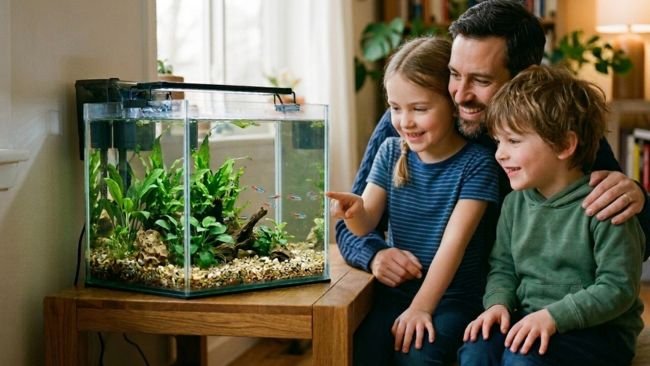
Families with young children, introducing a fish as a first pet can teach valuable lessons in responsibility and the life cycle without the overwhelming demands of larger animals. Viewing a school of neon tetras zip around or seeing a betta fish glide gracefully through the water can spark curiosity and a lifelong appreciation for nature in kids. Under active adult supervision and involvement, children get a sense of understanding that these are living beings that depend entirely on them.
Building The Perfect Aquarium:
Bringing fish into your home begins with creating the right environment for them. More than just filling a glass tank, it is about developing a small and self sustaining underwater world. Breaking down the steps is more practical, as it seems very overwhelming during start. Apart from just getting a fish tank, what do you need to start a fish tank, will set both you and your fish up for success.
Beginning with the tank set up, it is tempting to go for best fish for small tanks, if space is tight. Larger tanks (20 gallons or more for many beginner species) are actually easier to maintain than smaller ones because their water parameters remain more stable. In a tiny 5 gallon tank, even small fluctuations can stress or harm your fish, whereas a 20-gallon tank provides a buffer that keeps the environment more better. Understanding the right tank size for beginners is one of the most important steps for a healthy and thriving aquarium.
Next, filtration system. A good filter removes physical waste, breaks down harmful chemicals like ammonia and nitrite, and keeps the water clear and healthy. There are various types – hang-on-back (hob) filters, internal filters, sponge filters and your choice will depend on tank size and fish species. For most beginners, a reliable HOB filter is simple and most effective starting point. No fish can thrive without a filter. Filters are vital for a healthy aquatic environment.
Heating being equally important, many freshwater fish are tropical, need stable and warm water to stay healthy. A good submersible heater with a thermostat is essential to maintain the correct temperature. Lighting matters too, not only to show off your fish but also if you plan to keep live plants. Also substrate (gravel or sand) along with decorations and a thermometer to complete the basic setup. These fundamental fish tank essentials for beginners, play a role in the overall health and happiness of your finned companions.
Starting Your Fish Tank: Understanding The Life Cycle
Most important step when starting a fish tank is understanding the nitrogen cycle, also called “cycling” your tank. It is not setting up the equipment and immediately adding fish. It is about allowing beneficial bacteria to grow in your filter and substrate. They break down toxic fish waste into safer compounds, creating a stable and healthy environment. Learning how to cycle a fish tank for beginners is not that technical, but is straightforward and absolutely necessary for the long term well being of your pet fish.
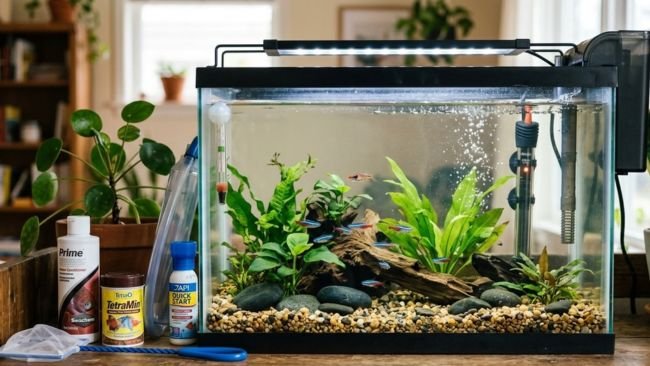
Apart from few general ways to cycle a tank, “fishless cycle” is widely recommended because it is the most humane approach. It involves adding an ammonia source (like pure ammonia from the store or a pinch of fish food) to an empty and fully set up tank. Over the course of several weeks, you need to monitor ammonia, nitrite and nitrate levels with a test kit. First, ammonia spikes, then nitrite rises and finally nitrates appear as ammonia and nitrite level drops to zero. Only once ammonia and nitrite consistently read zero it is safe adding fish. You need to avoid this common mistake as it is cause of fish deaths. Fish are highly sensitive to water quality and establishing this biological filtration system from the very beginning creates a stable environment. This whole setup ensures your fish can thrive rather struggle.
Picking Your First Finned Friends: Best Fish For Beginners
Choosing your first fish comes once your tank is fully cycled and stable. Not all fish are created equal when it comes to hardiness and temperament. As beginner, you should focus on low maintenance species that can handle minor changes in water conditions and get along well with other fish. So, choosing the right fish sets the stage for a healthy, vibrant aquarium and a rewarding experience for you as a new fish owner.
Here are some of the best freshwater fish for beginners, known for their hardiness, beauty and ease of care:
- Guppies: These lively, colorful fish are peaceful and full of personality. Their fins come in a dazzling array of shapes and colors, they breed easily. So if you have both males and females, be ready to welcome some tiny fry!
- Mollies and Platies: Similar to guppies, these hardy, community friendly fish add vibrant color and movement to your tank. They are also livebearers, making them an exciting choice for beginners who want active and social fish.
- Neon Tetras: A true classic, neon tetras are tiny, schooling fish that look stunning in groups of six or more. Their shimmering blue and red stripes are iconic and their peaceful nature makes them a favorite for beginner aquariums.
- Betta Fish: Often seen in small bowls, bettas are actually happiest in a properly heated filtered tank of at least 5 gallons. With their flowing fins and unique personalities, they are captivating pets that reward attentive care.
- Corydoras Catfish: These small, armored bottom dwellers are peaceful and helpful, keeping the substrate clean as they scavenge. They thrive in groups of three or more, making them perfect for community tanks.
- Cherry Barbs: Active and robust, cherry barbs bring a splash of reddish orange to the aquarium. They are lively, social and a great choice for a beginner friendly community setup.
When a choosing fish, always consider adult size, not just how small they appear in the pet store. A tiny common pleco might seem perfect for a 10-gallon tank, but it can grow over a foot long and quickly outgrow its home. Researching types of aquarium fish beforehand, ensures you pick species that will thrive in your chosen setup.
Caring For Your Fish: Simple Tips For A Healthy Aquarium
Keeping healthy aquarium is an ongoing process. Consistent care is all about simple routines and careful observation. One of the most important tasks is regular water changes. Aim to change about 25% of the water each week or every other week, depending on your tank size and the number of fish you have. This removes nitrates and replenishes essential minerals. Always use a good water conditioner to neutralize chlorine and chloramines from tap water, which are harmful to fish. While changing the water, you can also use a gravel vacuum to remove leftover debris from the substrate, keeping the tank clean and your fish healthy.
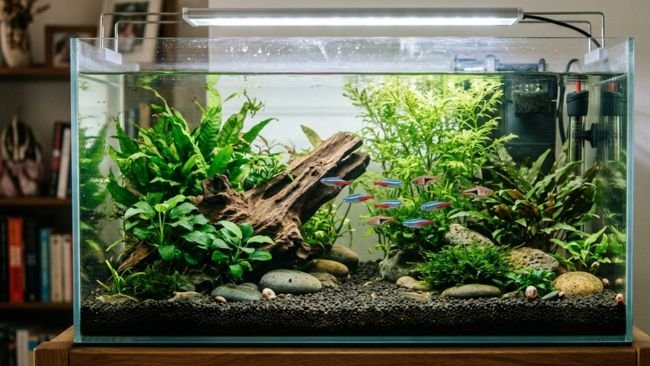
When it comes to feeding your fish, small and frequent meals are best. Overfeeding leads to poor water quality and health issues. The best fish food for beginners is high quality flake or pellet food, with the occasional treat of frozen or live food to keep things interesting. Watch how your fish swim, check that their colors remain vibrant and make sure they are eating well. Changes in behavior, clamped fins or white spots can be early indicators of stress or illness. Addressing issues promptly can prevent small problems from escalations. Preventing issues and keeping your fish healthy comes down to consistent water care and paying attention to your aquatic companions every day.
Fishkeeping Beyond The Basics: Next Steps For Your Aquarium
As you gain a bit of experience, you might start exploring more advanced aspects of fishkeeping like adding live plants. Some of the easiest options for beginners include Anubias, Java Fern and Amazon Swords. They require less specialized lighting and nutrients than many other plants, look beautiful in the tank and even help improve water quality. After the initial setup, monthly expenses are usually quite reasonable food, water conditioner, replacement filter media and electricity for heaters and filters. Compared to caring for a furry pet, keeping fish can be very affordable.
How long do pet fish live? It varies widely by species. With proper care, a goldfish can live 10–20 years or even longer. Bettas often live 3–5 years, while many smaller tetras may live 2–4 years. A healthy and thriving fish is a testament to good care and attention from their owner.
Common Mistakes New Fish Owners Make:
New fish owners can make mistakes, even with best intentions. Knowing the most common pitfalls ahead of time can save you a lot of frustration and keep your fish healthy and happy.
- Overstocking: Adding too many fish to your tank is a common error. Every fish produces waste and too many at once can overwhelm the beneficial bacteria, making the water toxic. Stick to stocking guidelines like the “one inch of fish per gallon” rule but remember that active species often need more space.
- Not cycling the tank: Skipping the cycling process is a serious mistake. Introducing fish to an uncycled tank exposes them to harmful ammonia and nitrite, which can be lethal.
- Overfeeding: Excess food decomposes and pollutes the water. Feed small amounts that your fish can eat in 2–3 minutes.
- Neglecting water changes: Failing to change the water regularly allows nitrates and other pollutants to build up, stressing your fish and harming their health.
- Impulse buys: Buying fish without researching their needs, adult size or compatibility with existing tank mates often leads to stressed or sick fish.
- Ignoring symptoms: Pay attention to subtle changes in behavior or appearance. Clamped fins, unusual swimming patterns or discoloration are early signs of illness that, if caught early, can prevent bigger problems.
By keeping these common mistakes in mind, you will create a safe and thriving environment for your aquatic companions.
Choosing fish as pets gives you the chance to bring a beautiful, lively and calming presence into your home. Fishkeeping is a hobby full of continuous learning, from understanding water chemistry to noticing the fascinating behaviors of your aquatic friends. The joy of a thriving aquarium, vibrant with healthy and active fish is a profound reward for the effort you put in. It is quite satisfying to watch your underwater world flourish, knowing you have provided a rich and healthy home. For anyone seeking a peaceful, engaging companion or the rewarding challenge of creating a miniature ecosystem, diving into fishkeeping can be one of the most enriching experiences. With proper setup, daily observation and patience, your fish will offer more than beauty, a window into a serene and captivating world right in your own home.