
The dream of an underwater world, teeming with life and color, often begins with a fundamental question: freshwater versus saltwater fish? This is not a trivial decision. It is the cornerstone upon which your entire aquatic hobby will be built, influencing everything from the initial setup cost of freshwater versus saltwater aquarium to the daily commitment of freshwater versus saltwater maintenance.
For aspiring aquarists, understanding the nuances between these two distinct paths is crucial for a rewarding and sustainable experience. Many beginners envision a dazzling coral reef right in their living room, only to be daunted by the complexities. Others assume a simple bowl is enough for a freshwater fish, leading to common pitfalls.
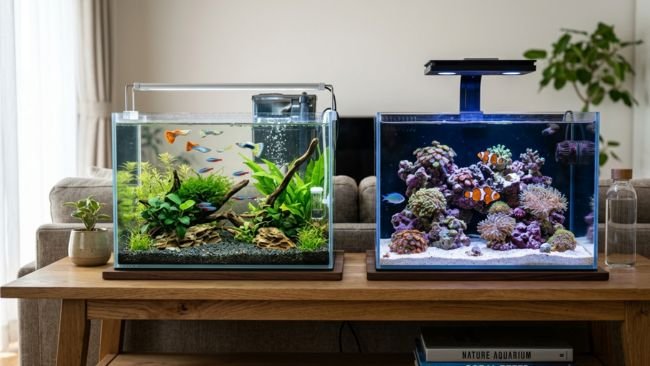
In reality, both options offer unique joys and challenges. There is no universally “better” choice, only the one that is best suited for your commitment level, budget and aesthetic preferences.
This article aims to provide a clear, expert perspective, helping you weigh the freshwater versus saltwater aquarium pros cons and make an informed decision before you even purchase your first piece of equipment. We will explore the realities of each, guiding you towards the aquatic adventure that is truly right for you.
Setup Complexity and Cost
The journey into fishkeeping begins with the tank itself and all the equipment required to create a habitable environment. Here, the distinction between freshwater versus saltwater fish tank setups becomes immediately apparent, largely in terms of complexity and financial outlay.
Freshwater Aquarium Setup: Accessible and Forgiving
For many, a freshwater aquarium serves as the quintessential entry point into the hobby. The initial setup is generally straightforward. You will need a tank, a filter, a heater (for most tropical fish), substrate, lighting and decorations.
The equipment for freshwater fish for beginners is widely available and comparatively inexpensive. A typical 20 gallon freshwater starter kit can be purchased for a relatively modest sum, often including most of the basic components.
The water itself is also simpler to manage. You are typically using treated tap water, which, while it requires a dechlorinator, does not demand precise salinity levels or complex mineral additions.
The range of best freshwater fish species available for beginners is vast, offering incredible diversity without exacting demands. For those prioritizing ease of entry and lower upfront expenses, the freshwater aquarium benefits are clear, it is forgiving, educational and accessible.
Saltwater Aquarium Setup: A More Significant Commitment
Establishing a saltwater versus freshwater aquarium involves a more significant investment of both time and money. Saltwater tanks require specialized equipment beyond the freshwater basics. This includes:
- Protein Skimmer: Essential for removing organic waste.
- Live Rock and Sand: Crucial for biological filtration and creating a natural environment.
- RO/DI Unit: To produce purified water, as tap water often contains impurities harmful to marine life.
- Salt Mix: Precisely measured to create the correct salinity.
- Refractometer or Hydrometer: To measure salinity accurately.
- Powerheads: For water circulation, mimicking ocean currents.
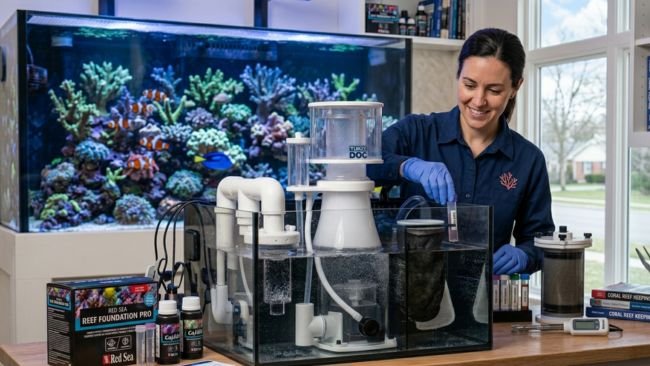
The setup cost of a saltwater aquarium is notably higher for saltwater. A basic 20 gallon nano reef, for example, could easily cost several hundred dollars just for the essential equipment, without even factoring in the marine life.
The complexity of mixing saltwater to specific gravity, coupled with the need for specialized equipment means that saltwater fish for beginners typically face a steeper learning curve from day one.
It is a hobby that demands more initial dedication and understanding before the first fish is even introduced.
The Ongoing Commitment: Maintenance and Care
Beyond the initial setup, the daily and weekly routines for freshwater versus saltwater maintenance also present notable differences. This ongoing commitment is a critical factor in determining what is best for you.
Freshwater Maintenance: Simpler Routines
Maintaining a freshwater tank is generally less demanding. Regular water changes (typically 25% every one to two weeks) are crucial to dilute nitrates and replenish minerals.
Testing the water parameters (ammonia, nitrite, nitrate, pH) is important, but freshwater systems are more resilient to minor fluctuations. The biological filtration established in a healthy freshwater tank is robust, capable of handling a fair amount of organic load.
For freshwater fish for beginners, daily tasks involve feeding and observing your fish for any signs of illness or stress. Weekly tasks usually include water changes and cleaning any algae from the glass. Monthly, you might clean or replace filter media.
The availability of low maintenance fish for beginners further streamlines this process, allowing new hobbyists to learn the ropes without being overwhelmed by intricate care demands.
The routines are straightforward and once established, can be completed quite efficiently.
Saltwater Maintenance: Precision and Consistency
Saltwater versus freshwater aquarium maintenance requires a higher degree of precision and consistency. Water changes are still necessary, but they often involve mixing new saltwater to the exact salinity and temperature of the tank, which adds an extra layer of complexity.
Regular, diligent testing of a wider range of water parameters including ammonia, nitrite, nitrate, pH, alkalinity, calcium and magnesium is often essential, especially if you plan to keep corals.
Marine environments are more fragile and less tolerant of errors. A small spike in a toxic compound can quickly devastate a saltwater tank. Equipment also requires more frequent cleaning, protein skimmers, for instance, need regular emptying and cleaning of their collection cups.
While this higher level of attention might seem daunting, it is necessary for the delicate ecosystems of a marine tank. This elevated level of attention means that the maintenance freshwater versus saltwater comparison clearly favors freshwater in terms of simplicity for a novice.
The Inhabitants: Fish Diversity and Hardiness
The type of fish you can keep is perhaps the most exciting aspect, but also one where freshwater versus saltwater fish diverge significantly in terms of availability, hardiness, and compatibility.
Freshwater Fish: A Vast and Forgiving Palette
The sheer variety of freshwater fish for beginners is astounding. From the vibrant hues of guppies and mollies to the serene movements of angelfish and the playful antics of corydoras, there is a fish to suit almost any aesthetic and tank size.
Many of the best freshwater fish species are incredibly hardy, adapting well to a range of water parameters. This resilience is a significant advantage for new aquarists who are still learning about proper water chemistry.

Many freshwater fish are relatively inexpensive, making it more affordable to establish a vibrant community tank. Their compatibility is also often easier to research and manage, with many peaceful freshwater fish beginners can keep together without conflict. You can create a diverse and active display relatively easily, building confidence as you go.
Saltwater Fish: Exotic Beauty, Higher Stakes
The allure of saltwater fish is undeniable. Clownfish darting through anemones, vibrant tangs grazing on algae or delicate seahorses clinging to corals these are images that captivate.
The colors and patterns of marine fish are often more intense and exotic than their freshwater relatives and the ability to keep corals adds another dimension of living beauty.
Beauty comes with higher stakes. Saltwater fish for beginners are available, but the overall pool of hardy, easy to keep species is smaller than in freshwater.
Many popular marine fish are sensitive to water quality, prone to specific diseases or have highly specialized dietary needs. The cost of individual marine fish is also significantly higher. Furthermore, compatibility in a saltwater tank can be more complex, as aggression between species is common and some fish are not “reef safe” (meaning they will pick at corals or invertebrates).
While the visual reward is immense, the journey to successfully keeping best saltwater fish often requires a deeper understanding of marine biology and aquarium husbandry.
Beyond the initial hurdles, consider the long term enjoyment and evolution of your hobby. The freshwater versus saltwater aquarium pros cons extend into the longevity and potential for progression in each path.
Freshwater Aquarium Benefits: Growth and Exploration
One of the significant freshwater aquarium benefits is its scalability. You can start with a small, manageable tank and gradually upgrade to larger, more complex setups as your knowledge and passion grow.
The ongoing cost of freshwater versus saltwater aquarium maintenance also remains lower for freshwater, primarily due to cheaper replacement parts, fish food and the absence of expensive salt mixes and specialized supplements. This makes it a sustainable hobby for many years.
You can progress within freshwater, moving from easy pet fish species to more demanding ones, or exploring different freshwater biotope tanks (e.g., Amazonian, African cichlid), planted aquariums or even breeding specific species.
It offers a continuous learning curve without requiring a complete overhaul of your basic equipment or knowledge. This progressive learning makes freshwater a highly engaging long-term hobby.
Saltwater Aquarium Benefits: A Dynamic Challenge
For those who embrace a challenge, saltwater offers an unparalleled level of engagement. The ability to create a thriving reef filled with corals, anemones and a diverse array of invertebrates adds a fascinating dimension.
The vibrant colors and unique behaviors of marine life are truly captivating. Many advanced aquarists find the meticulous nature of saltwater keeping highly rewarding, viewing it as a continuous scientific experiment.
The long term maintenance freshwater versus saltwater cost for a marine system can be considerably higher. Lighting for corals is expensive, as are many of the coral fragments themselves and specialized supplements are needed regularly.
While this higher cost supports a breathtaking display, it is a factor that will influence your financial commitment over the years. The progression in saltwater often involves moving from a “fish-only” tank to a “fish-only with live rock” (FOWLR) to a full “reef tank,” each step adding layers of complexity and specialized care.
Deciding What is Best for You
The decision of freshwater versus saltwater fish comes down to a personal assessment of your commitment, budget, and desired experience.
- For the Absolute Beginner: If you are new to the hobby, eager to learn without immediate overwhelming challenges and prefer a more forgiving system, starting with freshwater fish for beginners is almost always the recommended path. It allows you to master the fundamentals of water chemistry, filtration and fish care in a less expensive and less sensitive environment. Many of the best freshwater fish offer stunning beauty and engaging behaviors that will keep you captivated.
- For the Committed Hobbyist with a Budget: If you have some experience with general pet care, are prepared for a higher upfront cost, and are drawn to the exotic beauty and intricate science of marine environments, then saltwater fish for beginners might be your calling. Be prepared for a steeper learning curve, more rigorous maintenance and potentially higher ongoing expenses. It is a rewarding challenge for those who are truly dedicated.
The choice should not be based on perceived status or ultimate beauty. Both types of aquariums can be breathtakingly beautiful and incredibly rewarding. The most successful aquarists are those who choose a system that aligns with their resources and dedication, ensuring the well being of their aquatic pets.
Previous ◀ 🐟 | Pros and Cons of Keeping Aquarium Fish as Pets
Next ▶ 🐟 | Choosing The Right Fish Species For Beginners